Last updated: October 8, 2026, 7:30 a.m. ET.
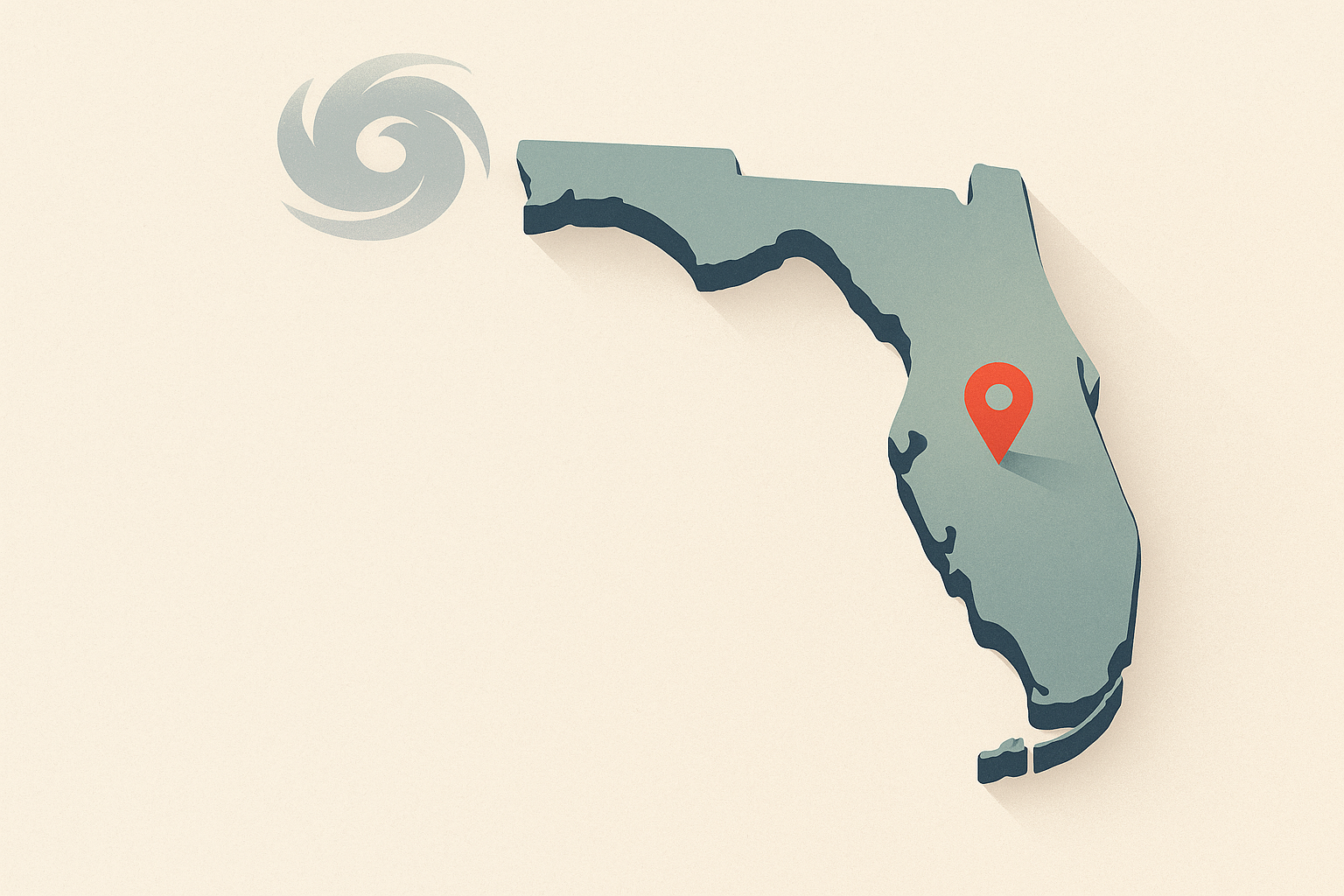
A watch map that points at the Panhandle looks like someone else’s problem from Orlando. One detail makes it yours. Citizens Property Insurance publishes a binding rule that turns on when a tropical storm or hurricane watch is issued for any part of Florida, not only for the part of the state in the cone. That condition is met today.
Here is what the National Hurricane Center has issued, what the statewide rule does to your options this week, and what is worth doing today.
What the National Hurricane Center Has Issued
National Hurricane Center Advisory 7 on Hurricane Isaias (AL092026), issued 4:00 AM CDT Thursday, October 8, 2026, lists these watch and warning areas:
- Hurricane Warning: Ocean Springs, Mississippi to the Bay/Gulf County Line, Florida
- Tropical Storm Warning: Jefferson/Plaquemines Parish Line, Louisiana to west of Ocean Springs, Mississippi, and east of the Bay/Gulf County Line to the Aucilla River, Florida
- Storm Surge Warning: Mouth of the Mississippi River to the Steinhatchee River, Florida
- Storm Surge Watch: Steinhatchee River to Yankeetown, Florida
Isaias was upgraded to a hurricane on the morning of October 8 and the earlier Florida watches became warnings.
Read current advisories at nhc.noaa.gov. This post quotes the watch and warning areas as issued and does not restate or extend the forecast track.
No Central Florida county sits inside any of those areas. The rule in the next section is statewide anyway, which is the reason this matters in Orlando.
Why a Panhandle Watch Freezes an Orlando Policy Change
Citizens publishes its binding rule on its support site (answer ID 470). Agents “may not bind applications for new coverage or policy change for increased coverage, regardless of effective date, when a tropical storm or hurricane watch or warning has been issued by the National Weather Service for ANY PART of the state of Florida.”
Read the scope of that sentence closely. It is not tied to your county, your ZIP code, or the cone. It turns on a watch anywhere in Florida, and it reaches policy changes that increase coverage as well as new applications. A storm aimed at the Panhandle reaches an Orlando homeowner who wanted to raise a dwelling limit this week.
That rule is now in force. On its binding-alerts page, Citizens states: “Isaias: No Policy Binding — Due to Isaias, no new policies or policy changes can be written statewide, effective October 7, 2026, at 11:05 a.m. Citizens cannot accept new policies or policy changes for additional coverage when a tropical storm or hurricane watch or warning has been issued by the National Hurricane Center for any part of Florida.” As of 11:05 a.m. ET on October 7, 2026, Citizens policy binding is suspended statewide. Citizens’ alert, posted October 7, refers to Tropical Storm Isaias; the National Hurricane Center upgraded Isaias to a hurricane on the morning of October 8. The suspension text itself is unchanged.
Notice what drives it. The suspension rests on a watch issued for any part of Florida, not on where the storm is forecast to go. That is the reason an Orlando address sits inside a restriction built around a Panhandle watch.
The suspension is temporary. Citizens says a follow-up notice goes out when it is lifted, and citizensfla.com/binding-alerts is where that notice appears. Same-year precedent shows how fast these move: Citizens posted a statewide suspension on 07.19.26 and lifted it on 07.22.26. Check the alerts page for the current status rather than assuming today’s state holds tomorrow.
Private carriers set their own binding restrictions during named storms, and most impose some form of restriction. Those restrictions are underwriting practice, not Florida law. Nobody is breaking a statute by selling you a policy during a storm, and no statute forces a carrier to issue one.
What Is Open to You Today, and What Is Not
Be direct about the honest part first. During a binding restriction, an independent agency often is unable to bind new coverage or add coverage for you, and Orca is no exception. An agency that promises otherwise during an active watch is describing something it does not control.
Closed right now at Citizens, and restricted at most other carriers: new policies and endorsements that increase coverage.
Open today, and worth your time:
- Pull your declarations pages for your home, renters, or business policies and read your limits, your deductibles, and the name of the insurer carrying each one.
- Find your hurricane deductible. It is a separate percentage deductible on most Florida property policies, and it is a different number from your standard deductible.
- Photograph your belongings and your building. Room-by-room photos and a written inventory are the records that support a claim later. They cost nothing and the window for making them is now.
- Line up a quote for after the restriction lifts so the work is ready rather than starting from zero.
The Flood Clock
Flood is not part of a homeowners, renters, or business owner’s policy. It is separate coverage, and it runs on its own clock.
A National Flood Insurance Program policy carries a 30-day waiting period. A flood policy purchased today does not provide coverage for this storm. Thirty days from October 8, 2026 is November 7, 2026, which still falls inside hurricane season, since the season ends November 30. That is the reason buying flood coverage today still has a point even though it does nothing for Isaias.
FEMA recognizes narrow exceptions to the 30-day wait, including a policy purchased in connection with a loan closing and certain properties affected by flooding on federal land burned by wildfire. Ask a licensed agent whether either one fits your situation rather than assuming it does.
For cost context, flood coverage in the Orlando area commonly runs $400 to $2,000 or more per year, per orcaig.com/flood/. Treat that as context rather than a quote, since your premium depends on your property, elevation, and limits.
What Is Not Happening Here
Three clarifications, because headline coverage blurs them:
- The state of emergency does not include Central Florida. Governor DeSantis signed Executive Order 26-202 on October 6, 2026, declaring a state of emergency for 25 Panhandle and Big Bend counties. Orange, Seminole, Osceola, Lake, Volusia, and Brevard are not among them.
- No evacuation instruction applies to Central Florida. Nothing in the advisories above directs anyone here to leave.
- The emergency early prescription refill rule is not available here. It applies in the counties named in the executive order, which do not include Central Florida.
Today Versus After the Watches Lift
Today: photograph and inventory, locate your declarations pages, read your hurricane deductible, check citizensfla.com/binding-alerts for the current status, and start a flood quote with the 30-day clock in mind.
After the watches lift: review your limits against what it would cost to rebuild or replace today, and make the coverage changes that the restriction blocked this week. Binding restrictions lift once the watches and warnings end, and the quiet stretch after a storm passes is when coverage work actually gets done.
What Orca Does
Orca Insurance Group is an independent insurance agency serving Greater Orlando and Central Florida, working with multiple carriers across homeowners, renters, flood, business owner’s policies, and commercial lines. A licensed agent reads your declarations pages with you, identifies which company carries each policy, and explains what your deductibles mean before the next storm. This article explains published rules and is not legal advice.
Call to action: Book a free coverage review for after the watches lift. We are not promising to cover you for this storm, and during an active binding restriction we often cannot add or increase coverage at all. What we do today is start your flood quote, since the 30-day waiting period means the clock starts when you buy, not when the water rises.