Orca Insurance Group · Winter Park · Serving all of Florida
Moving to Florida? Your insurance has to move with you.
Your old Medicare plan may not work here. Your old ACA plan won't. Your car, your home and your belongings need Florida policies too. One local agency can help you get all of it right.
Schedule a call with a local expertRather talk now? Call 407-672-2467 →
Health, Medicare, auto, home, flood and more · Phone, video, or our Winter Park office · No cost, no obligation

The Florida clock starts the day you move
New residents face a handful of deadlines that are easy to miss in the chaos of boxes and closings. Here are the ones that involve insurance.
10 days
Florida auto insurance and vehicle registration. You need a Florida policy before the tax collector will register your car.
30 days
Florida driver license. Transfer your out-of-state license once you establish residency.
60 days
Enroll in a Florida Marketplace (ACA) health plan after a permanent move, if you had coverage before.
About 2 months
Switch a Medicare Advantage or Part D plan that doesn't serve your new Florida address.
Your complete insurance checklist for moving to Florida
Welcome to the Sunshine State. Whether you're retiring to Central Florida, relocating for work, or bringing the whole family to Orlando, Winter Park, Tampa or the coast, moving to Florida changes almost every insurance policy you own. Health plans are built around where you live. Auto insurance follows Florida's no-fault rules. Homeowners policies here come with hurricane deductibles, and flood is never included. A plan or policy that was a great fit back home can leave real gaps once your address changes.
This guide walks through what new Florida residents need to know about health insurance, Medicare, ACA Marketplace plans, car insurance, homeowners and condo insurance, renters insurance, flood insurance and umbrella coverage. When you're ready, Orca Insurance Group's licensed agents in Winter Park can help you work through every piece of it, so nothing slips through the cracks during your move.
Medicare
Your old Medicare plan may not work in Florida
Original Medicare, Parts A and B, works in every state, so that part of your coverage comes with you. The trouble is the private plans most people add on top. Medicare Advantage (Part C) plans and Part D prescription drug plans are built around a service area, and Medicare Advantage service areas are often drawn county by county. Once you permanently move outside that area, you can't keep the plan.
That means the HMO or PPO you picked up north probably has no network in Orlando, Tampa or Jacksonville, your doctors back home won't be your doctors here, and the drug plan that covered your prescriptions may not be offered at your new address. If you don't choose new coverage, your old plan can eventually disenroll you and return you to Original Medicare, which can leave you without drug coverage.
How the Medicare moving window works
• Moving out of your plan's service area opens a Special Enrollment Period. Tell your plan before you move, and the window starts the month before your move and runs two full months after it. Tell them after, and it starts the month you tell them plus two more full months.
• You can pick a new Florida Medicare Advantage plan, a new Part D plan, or return to Original Medicare and add a drug plan.
• Medicare Supplement (Medigap) policies usually stay in force when you move, but your premium can change with your new address, so it's worth comparing.
• Annual Enrollment still applies. From October 15 to December 7 every year, anyone with Medicare can review and change plans for January 1.
Orca's licensed Medicare specialists check whether your Florida doctors and hospitals are in network, look up your prescriptions, and compare premiums, deductibles and copays side by side, so you choose a plan that fits your new life here. Learn more about Medicare in Florida.
Book a Medicare plan review

Obamacare / ACA Marketplace
Your old ACA plan won't follow you to Florida
ACA Marketplace health plans, often called Obamacare, are sold state by state and priced by county. When you move to Florida permanently, the plan you bought through your old state's exchange won't work here, and Florida uses HealthCare.gov rather than its own exchange. You'll need to apply for a new Florida plan, and your premium help will be recalculated for Florida plans and prices.
What new Florida residents need to know
• A permanent move gives you 60 days to enroll in a Florida Marketplace plan, outside of Open Enrollment.
• You generally need prior coverage to qualify. In HealthCare.gov states, you must have had qualifying health coverage for at least one day in the 60 days before your move. There are exceptions, such as moving to Florida from another country.
• Coverage usually starts the first of the following month after you pick a plan, so enroll quickly to avoid a gap.
• Premium help is based on your expected income and household size. A raise, a new job or a retirement move can change what you qualify for.
• Open Enrollment for 2027 coverage runs November 1, 2026 to January 15, 2027. Choose a plan by December 15 and coverage starts January 1.
Self-employed, retired before 65, between jobs, or moving with kids? Orca's licensed health insurance agents can check your Florida options, compare networks around your new home, and help with the paperwork. See how an ACA plan review works.
Book an ACA plan reviewOther health coverage to recheck after your move
Medicare and Marketplace plans get the headlines, but almost every kind of health coverage depends on where you live. Run through these too.
Employer plans and COBRA
A new Florida employer usually gives you a set window after hire to enroll. If you're on COBRA from your old job, check whether the network actually reaches Florida. Business owners can ask about group health insurance.
Dental and vision
Dental and vision networks are often regional. Before you book a cleaning or an eye exam here, confirm your plan has Florida providers, or compare dental and vision options.
Life and disability
Most life insurance travels with you, but a move is the time to update your address and beneficiaries and check that your coverage still matches a new mortgage or income.
Travel insurance
Heading back north to see family, or splitting the year as a snowbird? Travel insurance can help cover medical care and trip costs away from home.
Property & casualty
Florida home, auto and flood insurance: what's different here
Your car, your home and everything in it need just as much attention as your health plan. Florida's no-fault auto law, its hurricane season and its property insurance market mean policies here work differently from what you're used to. In most cases you'll need new Florida policies, not just an address change on the old ones.
As an independent agency, Orca Insurance Group shops multiple carriers for Florida auto, home, condo, renters, flood and umbrella coverage, so you can bundle where it makes sense and keep your coverage consistent from day one in your new home.


Auto: Florida PIP and property damage before you register

Flood: never part of a homeowners policy
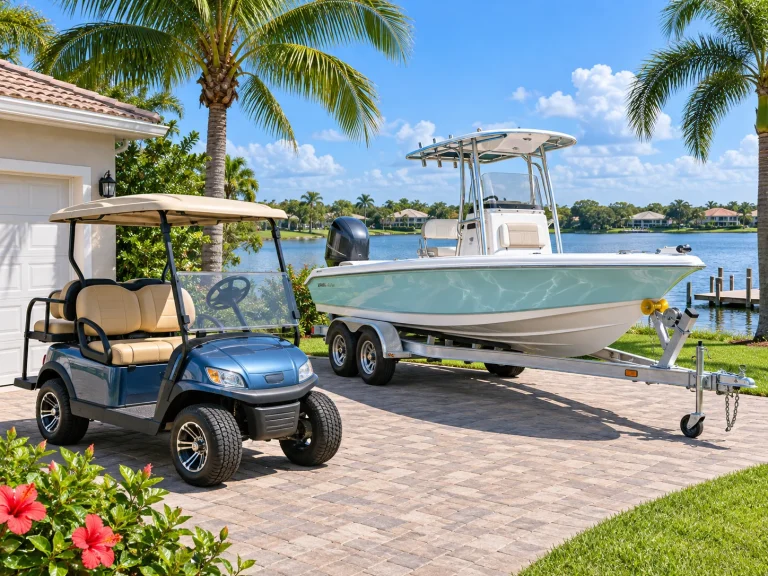
Boats and golf carts: usually need their own coverage
Florida car insurance
Florida is a no-fault state. To register a car here you need at least $10,000 in Personal Injury Protection (PIP) and $10,000 in Property Damage Liability (PDL) on a Florida policy. Bodily injury liability isn't required to register, but those minimums are among the lowest in the country and can leave you personally exposed after a serious crash, so many drivers carry more, along with uninsured motorist coverage. Get your Florida policy before your tax collector visit; the registration deadline can be as short as 10 days. Florida auto insurance →
Homeowners insurance and hurricane deductibles
Florida homeowners policies carry a separate hurricane deductible, often a percentage of your dwelling coverage such as 2%, 5% or 10%, on top of your regular deductible. Roof age and construction strongly affect price and eligibility, and a wind mitigation inspection can earn discounts for features like roof straps, impact windows and shutters. If no private insurer will write your home, Citizens Property Insurance, Florida's insurer of last resort, may be an option. Florida homeowners insurance →
Flood insurance
Standard homeowners and renters policies don't cover flood, and flooding in Florida isn't limited to the coast. You can buy flood coverage through the National Flood Insurance Program or a private flood insurer, even outside a high-risk zone. Most NFIP policies have a 30-day waiting period, so don't wait for a storm in the forecast. Your lender may require it, and Citizens requires flood coverage for many of its policyholders. Florida flood insurance →
Condo and renters insurance
Buying a condo? You'll need an HO-6 policy for the inside of your unit, your belongings and your liability, coordinated with the association's master policy and any special assessments. Renting while you look for the right neighborhood? Your landlord's insurance won't cover your things, so a renters policy fills that gap for a modest cost.
Umbrella liability
An umbrella policy adds liability protection above your auto and home coverage. With Florida's low auto minimums, plus a pool, a dock or a teen driver in the house, a move is a natural time to ask whether one belongs in your plan.
Boats, golf carts, motorcycles and RVs
Florida living often comes with new toys: a boat on the lake, a golf cart in a 55+ community, a motorcycle you can ride all year. Most need their own policy or endorsement, since homeowners policies usually offer little or no coverage for them. See boat, motorcycle and RV insurance.
Bringing a business with you? Moving a company to Florida means new rules for workers' compensation, commercial auto and liability. Ask about commercial insurance, business owner policies and group health benefits for your Florida team.
Review my home and auto coverageYour Florida insurance moving checklist
Work through these in order and you'll avoid the most common gaps new residents run into.
1
Tell your health plan your move date
If you have Medicare Advantage or Part D, telling your plan before you move starts your switching window early.
2
Line up Florida auto insurance
You need Florida PIP and property damage coverage before you can register your car.
3
Bind home or condo coverage before closing
Your lender will ask for it. Check the hurricane deductible in dollars, not just the percentage.
4
Start flood coverage early
Most flood policies have a 30-day wait, so buy before you need it.
5
Enroll in Florida health coverage
Marketplace plans: within 60 days of your move. Medicare plans: within your Special Enrollment Period.
6
Get your Florida driver license
Within 30 days of establishing residency. Then give your insurer the new license number.
7
Update life insurance and beneficiaries
New address, new mortgage, maybe new beneficiaries. A quick review keeps everything current.
8
Cancel old policies last
Only cancel out-of-state coverage once your Florida policies are active, so there's never a gap.

Talk with a local expert about your move
Orca Insurance Group is an independent agency in Winter Park serving new residents across Florida. Our licensed agents help you sort out what has to change, what can stay, and what to do first, so you can focus on settling in instead of reading policy fine print.
Helpful to have handy:
• Your current health or Medicare plan details, plus your doctors and prescriptions
• Declarations pages from your current auto and home policies
• Vehicle details and drivers in your household
• Your new Florida address, and the home's year built and roof age if you're buying
Reviews are by phone, by video, or in person at our Winter Park office, at no cost and with no obligation. If you have Medicare, your Medicare plan review is its own appointment with a licensed Medicare specialist, as federal rules require, and your home, auto and other coverage is reviewed separately.
Schedule a call with a local expertOr call 407-672-2467 · 2335 Temple Trail, Ste 5, Winter Park, FL 32789
Moving to Florida: insurance questions we hear most
Does my Medicare work in Florida?
Original Medicare (Parts A and B) works in every state, including Florida. Medicare Advantage and Part D plans are tied to a service area, though, so if you permanently move outside your plan's area you'll need to choose a new plan or return to Original Medicare.
How long do I have to change my Medicare Advantage plan after moving to Florida?
Moving out of your plan's service area opens a Special Enrollment Period. If you tell your plan before you move, it starts the month before your move and lasts two full months after. If you tell your plan after you move, it starts the month you tell them and lasts two more full months.
Can I keep my ACA Marketplace plan from another state?
No. Marketplace plans are state-specific, and Florida uses HealthCare.gov. A permanent move gives you 60 days to enroll in a Florida plan, as long as you had qualifying coverage for at least one day in the 60 days before your move (with some exceptions, such as moving from abroad).
What car insurance do I need in Florida?
To register a vehicle in Florida you need at least $10,000 of Personal Injury Protection (PIP) and $10,000 of Property Damage Liability (PDL) on a Florida policy. Bodily injury liability and uninsured motorist coverage aren't required to register, but most drivers should consider them.
How soon after moving do I need Florida car insurance?
You'll need it before you register your car. Florida law gives new residents as little as 10 days to register once residency is established, for example by starting a job or enrolling a child in public school, and 30 days to get a Florida driver license. Check with your county tax collector for local details.
Does Florida homeowners insurance cover hurricanes and floods?
Homeowners policies generally cover hurricane wind damage, subject to a separate hurricane deductible. Flood damage, including storm surge, is not covered by homeowners insurance and requires a separate flood policy.
What is a hurricane deductible?
It's a separate deductible that applies to hurricane damage, usually set as a percentage of your dwelling coverage, such as 2%, 5% or 10%. On a home insured for $400,000, a 2% hurricane deductible means the first $8,000 of covered hurricane damage is yours.
Is there a waiting period for flood insurance in Florida?
Most National Flood Insurance Program policies take effect 30 days after purchase, with some exceptions such as coverage bought in connection with a new mortgage. Private flood policies may have different waiting periods. Either way, buy flood coverage well before hurricane season.
Welcome home. Let's get you covered.
New state, new rules, new policies. A no-cost review with a licensed Orca agent will show you exactly what needs to change and what can stay.
Schedule a call with a local expertPrefer the phone? Call 407-672-2467